
HVAC System Installation and Replacement
If it’s time for a system replacement, we’ll walk you through your options, explain what today’s equipment standards mean for your home, and give you a reliable estimate.
Done Paying to Fix a System That Keeps Breaking?
If you’ve been collecting repair bills for two or three years running, you already know the math stops adding up. Every system reaches a point where one more fix is just money down the drain.
Some signs it’s time for a replacement:
- Your equipment is 15 years old or older
- You’ve had two or more repair calls in the same season
- The system runs but can’t keep up on the hottest or coldest days
- Your energy bills keep climbing with no change in usage
- You’re still running on an older refrigerant that’s being phased out
If a few of those sound familiar, you’ve been band-aiding it along. At some point, a full replacement costs less than the next three repairs you’re going to need.

Why We Replace the Full System
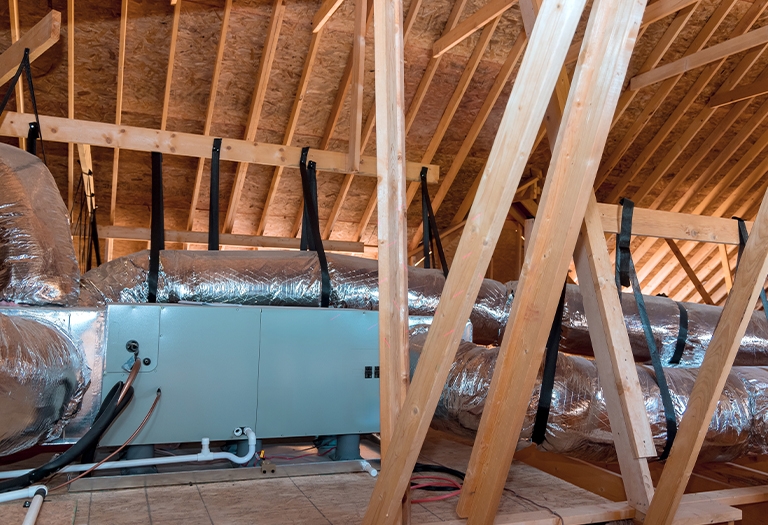
When it’s time for new equipment, we recommend replacing both the indoor and outdoor units together. There’s a practical reason for that.
Current efficiency standards (SEER2 ratings) and the ongoing refrigerant transition mean new outdoor units are designed to work with new indoor units. Mixing a new condenser with an old air handler creates a mismatch. The system can’t hit its rated efficiency, warranty coverage gets complicated, and you end up paying more to run equipment that’s working against itself.
A matched system means everything is engineered to work together from day one. Better efficiency, better comfort, cleaner warranty, and fewer problems down the road.
Why We Install Amana
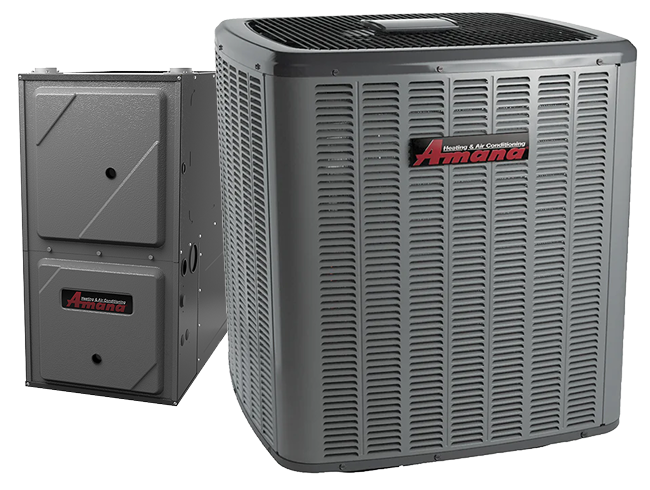
We service every major brand out there. Carrier, Trane, Lennox, you name it. But when it comes to new installations, we chose Amana for specific reasons.
The warranty. Amana offers a 10-year unit replacement limited warranty on qualifying models. That’s not a parts warranty. If the unit fails within that window, they replace it.
The pricing. We purchase equipment through a trusted vendor partnership, which keeps equipment costs competitive without cutting corners on quality. That savings gets passed to you.
The relationship. Our equipment rep isn’t a voice on a 1-800 number. We can sit down over coffee, talk through a specific installation, and get real answers. When we’re standing in your home figuring out the right system for your situation, that access matters.
We’re not here to sell you on a brand. We’re telling you why we chose the one we install.
What the Process Looks Like


Your Budget, Your Call
We hear it all the time: “I know I need a new system, but I don’t know if I can swing it right now.”
Here’s how we handle that. We present options. If your budget allows for a higher-efficiency two-stage system, we’ll show you what that looks like. If your budget says “get me something reliable that works,” we do that instead. No pressure to go bigger than you need.
We also offer financing through Acorn Finance. You can apply on their site, check your options without impacting your credit score, and see what monthly payments look like before you commit to anything.

Common Questions About Replacement
Most standard residential replacements are completed in a single day. Larger homes or more complex configurations may take longer, and we’ll let you know upfront during the quote.
We strongly recommend it. Current efficiency standards mean new equipment is designed as a matched system. Replacing only half creates an efficiency mismatch and can limit your warranty coverage.
We repair and maintain every major brand, including Carrier, Trane, and Lennox. For new installations, we install Amana equipment.
We offer financing through Acorn Finance with competitive rates and no prepayment penalties. You can check your options online without affecting your credit score.
We remove and dispose of your old system as part of the installation. You don’t need to arrange anything on your end.
In most cases, yes. If your current system is 15 or more years old, modern equipment with higher SEER2 ratings uses significantly less energy to deliver the same comfort. The difference shows up on your monthly bill.